Conquering Kilimanjaro: Hiking the Challenging Umbwe Route
Choosing the Umbwe Route
When Lucian and I decided to tackle Mount Kilimanjaro, Africa’s tallest peak, we wanted a challenge that would push our limits. Enter the Umbwe Route—a steep and direct path often considered the most demanding way up Kilimanjaro. While most climbers choose more gradual routes to acclimatize, we were drawn to Umbwe’s reputation for breathtaking scenery and solitude. You can see our exact literary here.
At just 37 kilometers (23 miles) to the summit, the Umbwe Route is one of the shortest paths to Uhuru Peak. But what it lacks in length, it makes up for in intensity, with rapid elevation gains and tough terrain. We knew this would be no ordinary hike—it would test our endurance, resilience, and determination.
The Ascent Begins
Our journey started at the Umbwe Gate (1,650 m), where we met our guides and porters, who would play an essential role in our climb. The first day’s trail led us through lush rainforest, where towering trees created a canopy of green and the air was thick with the scent of earth and leaves.
The path quickly became steep, with twisting switchbacks and rocky inclines. Despite the physical challenge, Lucian and I couldn’t help but marvel at the beauty around us—dense vegetation, the calls of exotic birds, and the occasional monkey swinging through the trees. By the time we reached our first camp at Umbwe Cave (2,850 m), we were tired but exhilarated.
Climbing Higher: Barranco Camp
The next day, the rainforest gave way to a surreal landscape of giant heather and moorland. As we ascended, the air grew thinner, and we began to feel the effects of altitude. Frequent breaks and slow, steady pacing—“pole pole” as the guides say in Swahili—were critical.
By the end of the day, we arrived at Barranco Camp (3,960 m), nestled beneath the towering Barranco Wall and offering stunning views of Kibo Peak. Watching the sunset light up the glaciers above was a moment we’ll never forget.
The Summit Push
After several days of grueling trekking and acclimatizing, the big day arrived. We set out just after midnight from Barafu Camp (4,673 m), the final staging ground for the summit. With headlamps lighting the way, we trudged through the icy darkness, driven by determination and the encouragement of our guides.
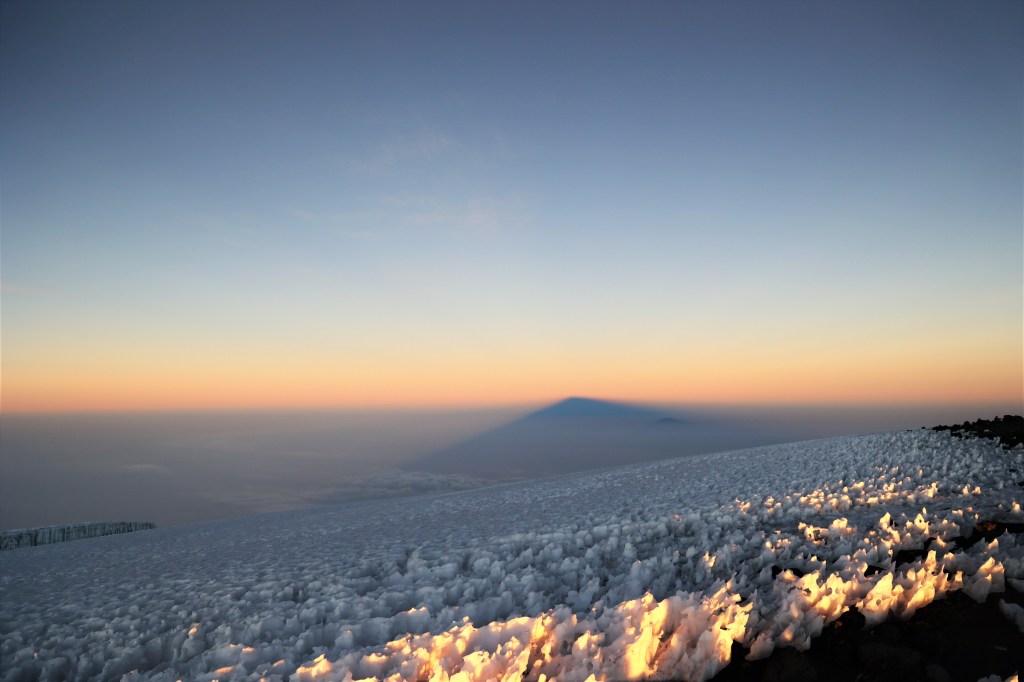
The hours passed slowly, each step a battle against fatigue and altitude. But as the first rays of sunlight broke over the horizon, we reached Stella Point (5,756 m). From there, it was a final push along the crater rim to Uhuru Peak (5,895 m)—the highest point in Africa.
Standing on the summit with Lucian, exhausted but elated, we were overwhelmed by the magnitude of what we had achieved. The panoramic views of the world below were worth every ounce of effort.
Reflections on the Descent
Descending Kilimanjaro was a journey in itself, retracing our steps down the steep Umbwe Route. The exhilaration of summiting made the challenges of the descent bearable, and we arrived back at the base with a sense of profound accomplishment.
Climbing Kilimanjaro via the Umbwe Route was one of the toughest but most rewarding adventures we’ve undertaken. It reminded us of the power of perseverance, the importance of teamwork, and the unparalleled beauty of the natural world.
Tips for the Umbwe Route
- Prepare Physically: The steep terrain and rapid elevation gain require strong legs and good endurance.
- Focus on Acclimatization: Although the route is short, spend extra days at camps if needed to adjust to the altitude.
- Pack Smart: Bring layers for the changing climates, from rainforest heat to summit cold.
- Trust Your Team: The guides and porters are invaluable for their expertise and support.
- Take It Slow: “Pole pole” is the mantra for a reason—pace yourself to avoid altitude sickness.
Kilimanjaro is more than a mountain; it’s a journey that challenges you physically, mentally, and emotionally. For Lucian and me, it was another incredible chapter in our quest to explore the world’s peaks.
Umbwe Route Itinerary
Our Kilimanjaro adventure via the Umbwe Route was both challenging and unforgettable. Here’s a brief look at the itinerary we followed:
Day 1: Umbwe Gate to Umbwe Camp
- Elevation: 5,249 ft to 9,514 ft
- Distance: 11 km (7 miles)
- Hiking Time: 5-7 hours
- Habitat: Heath
The day began with a drive through villages and plantations to Umbwe Gate. From there, we ascended sharply through dense rainforests along a narrowing trail, climbing the ridge between two rivers. We ended the day at Umbwe Camp, nestled among thick trees and undergrowth.
Day 2: Umbwe Camp to Barranco Camp
- Elevation: 9,514 ft to 13,044 ft
- Distance: 6 km (4 miles)
- Hiking Time: 4-5 hours
- Habitat: Heath
Day two brought rockier terrain and stunning glimpses of Kilimanjaro. As we moved toward Barranco Valley, the trail flattened and led us through the enchanting Senecio Forest, where we made camp for the night.
Day 3: Barranco Camp to Karanga Camp
- Elevation: 13,044 ft to 13,106 ft
- Distance: 5 km (3 miles)
- Hiking Time: 4-5 hours
- Habitat: Alpine Desert
We started the day by descending into a ravine and climbing the Great Barranco Wall, a steep but non-technical 900 ft ascent. After crossing hills and valleys, we reached Karanga Camp for a shorter day to acclimatize.
Day 4: Karanga Camp to Barafu Camp
- Elevation: 13,106 ft to 15,331 ft
- Distance: 4 km (2 miles)
- Hiking Time: 4-5 hours
- Habitat: Alpine Desert
We ascended to Barafu Hut, completing the Southern Circuit with breathtaking views of Mawenzi and Kibo peaks. Here, we rested and prepared for our summit attempt.
Day 5: Barafu Camp to Uhuru Peak to Mweka Camp
- Barafu to Uhuru Peak
- Elevation: 15,331 ft to 19,341 ft
- Distance: 5 km (3 miles)
- Hiking Time: 6-8 hours
- Habitat: Arctic
- Uhuru Peak to Mweka Camp
- Elevation: 19,341 ft to 10,065 ft
- Distance: 12 km (7 miles)
- Hiking Time: 4-6 hours
- Habitat: Rainforest
Starting at midnight, we ascended in darkness, battling wind and cold. Near Stella Point, we were rewarded with a stunning sunrise before reaching Uhuru Peak, the summit of Kilimanjaro. The descent was long and rocky, taking us to Mweka Camp for a well-earned rest.
Day 6: Mweka Camp to Mweka Gate
- Elevation: 10,065 ft to 5,380 ft
- Distance: 10 km (6 miles)
- Hiking Time: 3-4 hours
- Habitat: Rainforest
Our final day was a descent through muddy, wet trails to Mweka Gate, where we collected our summit certificates. A vehicle then took us back to Moshi to celebrate an unforgettable journey.
The Umbwe Route was as rewarding as it was demanding, offering stunning landscapes and memories that will last a lifetime.
 Beyond Base Camp
Leave a comment