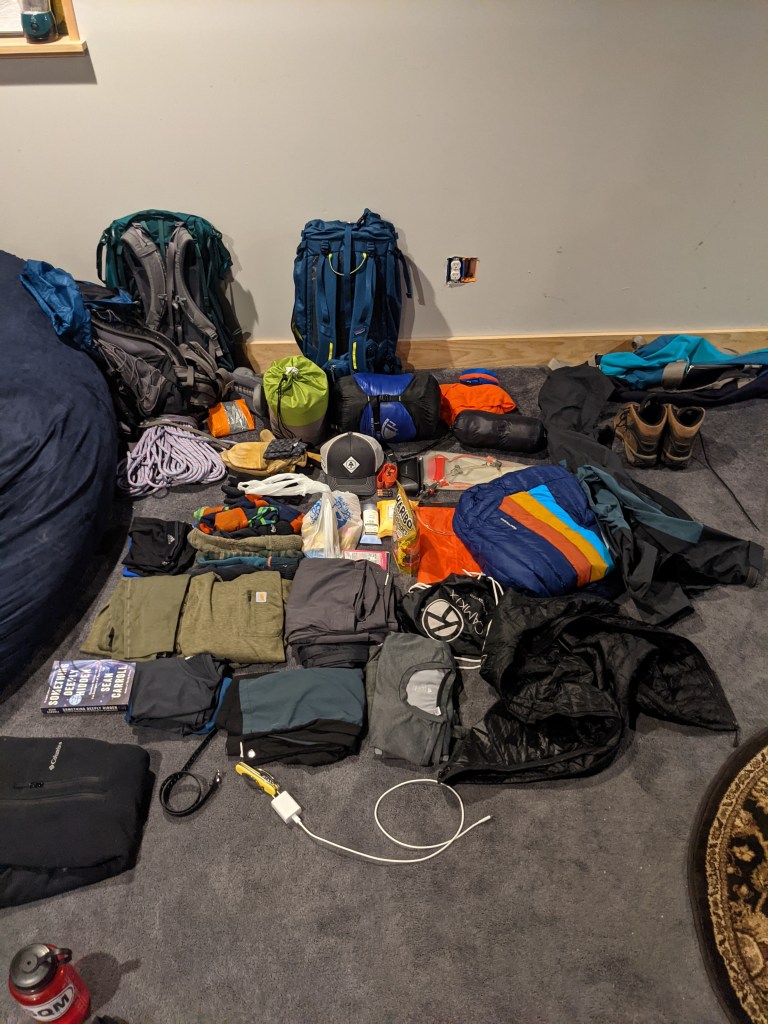
Preparing for Mount Kilimanjaro requires careful planning and the right gear. Here’s a comprehensive list of what you’ll need to stay safe, comfortable, and ready for the diverse conditions you’ll face on Africa’s tallest peak.
Clothing
Base Layers:
- Moisture-wicking long-sleeve tops (2-3)
- Moisture-wicking long underwear (2-3 pairs)
Insulating Layers:
- Fleece or soft-shell jacket
- Insulated down or synthetic jacket
Outer Layers:
- Waterproof and windproof hard-shell jacket
- Waterproof hard-shell pants
Lower Body Layers:
- Hiking pants (2-3 pairs)
- Lightweight shorts (optional for lower altitudes)
Headwear:
- Wide-brim hat or cap for sun protection
- Fleece or wool beanie for cold conditions
- Buff or neck gaiter for wind and dust
Gloves:
- Lightweight liner gloves
- Insulated gloves or mittens
Footwear:
- Hiking boots (waterproof with good ankle support)
- Gaiters to keep out debris and snow
- Camp shoes or sandals for evenings
- Warm trekking socks (4-5 pairs)
- Sock liners to prevent blisters
Gear
Backpacks:
- Daypack (25-35L) for personal items during the climb
- Duffel bag (carried by porters, 90L max, waterproof recommended)
Sleeping Gear:
- Sleeping bag (rated for -10°C to -20°C or 14°F to -4°F)
- Sleeping bag liner for added warmth
Trekking Equipment:
- Trekking poles (adjustable and collapsible)
- Headlamp with extra batteries
- Sunglasses with UV protection
Hydration and Nutrition
- Hydration bladder (2-3L capacity)
- Water bottles (1-2, insulated preferred)
- Water purification tablets or filter
- High-energy snacks (trail mix, protein bars, etc.)
Personal Items
- Sunscreen (SPF 30 or higher)
- Lip balm with SPF
- First aid kit (painkillers, blister care, personal medications)
- Toiletries (biodegradable soap, toothbrush, toothpaste, wet wipes)
- Quick-dry towel
- Hand sanitizer
- Lightweight travel wallet or pouch
Optional Items
- Camera or smartphone with extra batteries
- Power bank or solar charger
- Journal and pen
- Book or e-reader for downtime
- Lightweight binoculars
Documents
- Passport (with necessary visas)
- Travel insurance (including high-altitude coverage)
- Vaccination certificates (e.g., yellow fever, if required)
Pro Tips
- Layering is Key: Kilimanjaro’s climate changes drastically as you ascend. Be prepared for everything from tropical heat to freezing temperatures.
- Break in Your Boots: Ensure your hiking boots are well broken in to avoid blisters.
- Pack Light: Porters will carry your main bag, but it must meet weight restrictions (usually 15kg or 33lbs).
- Stay Hydrated: Drink plenty of water to combat altitude sickness.
- Rent Smart: If you’re missing gear, many outfitters in Tanzania offer rental options.

 Beyond Base Camp
Leave a comment